ALT AMERICAN LABORATORY TRADING 33486 Leica Inverted Camera Microscope DMI1 Compound MC120
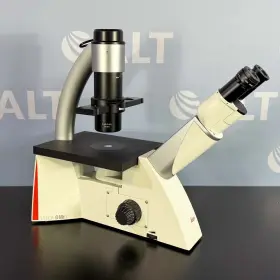
( Brand: Alt American Laboratory Trading ), ( Part Type: Compound Camera ), ( Manufacturer Part Number: 33486 )
Review ALT AMERICAN LABORATORY TRADING Leica Inverted Compound Microscope Hd Camera
The ALT AD33486 Leica DMI1 Inverted Compound Microscope system, equipped with an MC120 camera, is a state-of-the-art imaging solution designed for advanced microscopic research and documentation. This meticulously engineered system boasts efficient and intuitive workflows ideal for laboratories and industrial settings.
The Leica DMI1 microscope is an inverted compound microscope, offering exceptional optical performance and versatility. Its inverted design enhances accessibility to samples, making it particularly suitable for working with difficult-to-reach specimens or samples suspended in liquids. Equipped with a high-precision focused dual-view optics, this microscope delivers crisp, clear images essential for detailed analysis.
The Leica MC120 camera, integrated into this system, captures sharp and accurate images of the sample under observation, ensuring comprehensive documentation of the specimen for record-keeping or further analysis. Advanced imaging functionalities such as time-lapse imaging, z-stack imaging, and image sequencing, enable study of dynamic processes of living cells or changing samples over time.
A wide range of Leica objective lenses catering to different magnification requirements, including oil immersion objectives, are compatible with the DMI1 system. This allows users to achieve high-resolution images, making this system a robust and adaptable option for a multitude of applications.
A user-friendly DMI1 SoftWorx 7.0 interface simplifies operation, offering a seamless solution for capturing, archiving, and analyzing images in real-time. With its compatibility with different imaging software and integration with third-party applications, this system can easily integrate into existing research workflows, enhancing productivity and streamlining the process from data acquisition to data interpretation.
In summary, the ALT AD33486 Leica DMI1 Inverted Compound Microscope, featuring an MC120 camera, is a powerful scientific imaging tool, offering exceptional optical performance, versatility, and ease of use for a broad range of applications in research, education, and industry settings.
The Leica DMI1 Inverted Compound Microscope with the MC120 Camera is a high-end microscopy system designed for research and professional applications. Here are some pros and cons to help you make an informed decision about buying this microscope:
Pros:1. High-quality imaging: The MC120 camera provides high-resolution images with excellent image contrast and clarity, making it suitable for precise analysis and documentation of microscopic structures.
2. Inverted design: An inverted microscope provides better observation of flatter specimens, such as cell cultures, and allows for the use of objective lenses with larger working distances.
3. Wide range of objectives: The Leica DMI1 comes with a comprehensive range of objective lenses, including Plan Apochromats, which offer high-resolution and high-contrast imaging.
4. Autofocus: The autofocus feature ensures that the microscope remains in focus, saving time and effort, particularly when working with thick specimens or long observation periods.
5. Integrated software: The Leica application suite provides advanced image analysis and documentation capabilities, including image stitching, measurement tools, and filtering options.
Cons:1. Cost: The Leica DMI1 Inverted Compound Microscope with MC120 camera is a high-end system, and its cost may be prohibitive for some potential buyers.
2. Complex setup: Setting up and using a system of this complexity may require advanced microscopy knowledge and expertise, which could be a challenge for some users.
3. Size: The microscope is relatively large and heavy, making it less portable and more difficult to move around than some other microscopes.
4. Maintenance: As with any complex microscopy system, regular maintenance and calibration are essential to ensure optimal performance, which can add to the overall cost.
In conclusion, the Leica DMI1 Inverted Compound Microscope with MC120 camera offers exceptional imaging capabilities and a range of features that make it an excellent choice for research and professional applications. However, its high cost, complex setup, size, and maintenance requirements may be deterrents for some potential buyers.
If you have the budget and the expertise, the Leica DMI1 is a worthwhile investment for accurate and detailed microscopic analysis. However, if you are looking for a more affordable or portable solution, you may want to consider other options.
Recommendation: If you require high-resolution microscopic imaging for research or professional applications and have the necessary expertise and budget, the Leica DMI1 Inverted Compound Microscope with MC120 camera is a recommended option. If you have a smaller budget or require a more portable solution, you may want to consider other inverted microscopes with similar imaging capabilities, such as the Nikon Eclipse Ti series or the Zeiss Axio Observer Z1. Before making a final decision, it is recommended to evaluate various factors, including your specific imaging requirements, budget, and expertise level.
Details:
Camera: Leica MC120 HD for high-resolution image capture. Paired with the MC120 HD Camera, this system provides high-resolution imaging for seamless documentation and analysis. Stage: Fixed or mechanical stage with precise controls. Applications: Cell culture, live cell imaging, and tissue examination.
Objectives: Compatible with a range of magnifications for diverse applications. With its reliable performance and advanced imaging capabilities, the Leica DMi1 with MC120 HD Camera is a great choice for laboratories focused on microscopy research diagnostics. Specifications: Microscope Type: Inverted compound. Illumination: LED illumination for bright and uniform lighting.
Leica DMi1 Inverted Compound Microscope With MC120 HD Camera The combines user-friendly design with exceptional imaging capabilities, ideal for cell culture, tissue examination, and live studies.
specifications curativescope:
- brand: Alt American Laboratory Trading
- part type: Compound Camera
- manufacturer part number: 33486
general curativescope:
- HeAlthcare, Lab Dental > Medical Lab Equipment, Devices > Microscopes
- condition: Seller refurbished
payments curativescope:
- credit card: Discover
- wallet: Paypal
- other
offer curativescope:
- started: February 5, 2025
- sold: 0
- availability: In Stock
- options: Ship-to-home
- quantity: 1
shipping curativescope:
- type: Fixed
- cost: $0.00
- service: Flat Rate Freight
- class: Freight
seller curativescope:
- rating: 100.0%
- # reviews: 1080
- city: East Lyme, Connecticut
returns curativescope:
- method: Money back
- policy: Returns Accepted
- time: 30 Days
- paid by: Buyer
Alt American Laboratory Trading 33486 Is Similar To:
- Alt American Laboratory Trading 21878 Olympus Ch-2 Series System Microscope Model Cht (57.9% similar) Specifications: light source: 30W tungsten bulb. Dimensions: 8 x 10 15 20 25 38 cm. Providing superior results and image contrast throughout the viewing field, chat provides extended working distance to optimize ease of operation a brighter light source for unimpeded observation...(December 13th, 2024)
- Alt American Laboratory Trading 28982 Aus Jena Planachromat 63x 0.80 0.17 Pol Objective (50.8% similar) Part #: Alt American Laboratory Trading 28982 for sale...(December 13th, 2024)
- Alt American Laboratory Trading 22910 Olympus Ic 20 Msplan 0.46 0 F 180 Objective (50% similar) 5922910 Olympus ic 20 ms plan 0.46 /0 f 180 objective 59 22910...(December 13th, 2024)
- Alt American Laboratory Trading 24281 Nikon Planapo 60 1.40 Oil Dm Ph4 160 0.17 (50.8% similar) Part #: Alt American Laboratory Trading 24281 for sale...(December 13th, 2024)
- Alt American Laboratory Trading 27069 Nikon Pl L 10 0.25 160 Microscope Objective (56.4% similar) Numerical aperture: 0.25. 383.527069 the Nikon pl l 10/0.25 160/- microscope objective is a positive low phase contrast, long distance lens, and can be connected to computer. Mechanical tube length : 160MM. Specifications: lateral magnification: 10X...(December 13th, 2024)
- Alt American Laboratory Trading 28509 C.reichert Wien Epi 45 0.65 250 05 Np Objective (48.1% similar) Part #: Alt American Laboratory Trading 28509 for sale...(December 14th, 2024)
- Alt American Laboratory Trading 28515 C.reichert Wien Microscope Objective Epi 8 0.15 250 2 2 Np (56.7% similar) Part #: Alt American Laboratory Trading 28515 for sale...(December 14th, 2024)
- Alt American Laboratory Trading 28517 C.reichert Wien Microscope Objective No 3 (61.8% similar) 35928517 c.Richter wine microscope objective, no. 3C.RICHTER wine microscope objective, no...(December 14th, 2024)
- Alt American Laboratory Trading 28598 Olympus 4x 0.10 Microscope Objective (58.1% similar) Part #: Alt American Laboratory Trading 28598 for sale...(December 14th, 2024)
- Alt American Laboratory Trading 28597 Bausch And Lomb 21x 8mm 0.50 Microscope Objective (55.1% similar) 112.128597 21X 8MM 0.50 objective for Busch limb microscopes...(December 14th, 2024)
- Alt American Laboratory Trading 28596 Bausch And Lomb 16mm 0.25 N.a 10x Microscope Objective (54.5% similar) 10X microscope OBJECTIVE16MM 0.25 n.a. 10X objective for Busch limb MICROSCOPES.47.228596 16MM 0.25 n.a...(December 14th, 2024)
