BLONDER TONGUE 5915 Analog Ntsc Demodulator AD-1
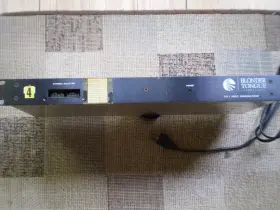
( Brand: Blonder Tongue ), ( Manufacturer Part Number: 5915 )
Review BLONDER TONGUE Ad Series Agile Analog Ntsc Demodulator Ad-1 Model Number
The Blonder Tongue Model 5915 Analog NTSC Demodulator AD-1 is a versatile and powerful broadcast signal monitoring solution designed for use in various applications, including cable headends, master antenna systems, and broadcast studios. This demodulator is specifically engineered to decode and process NTSC (National Television System Committee) analog signals, making it an essential tool for those working with traditional broadcast television systems.
The heart of this device is its advanced demodulator circuitry, which is capable of receiving and decoding both composite video and separate luminance and chrominance signals. This feature makes it an ideal choice for monitoring and analyzing the quality of broadcast signals, as well as for applications where multiple signals need to be processed simultaneously.
One of the key advantages of the Blonder Tongue Model 5915 is its ability to support both 4:3 and 16:9 aspect ratios. This flexibility allows users to monitor both standard definition and widescreen signals, making it a versatile solution for a wide range of broadcast applications. Additionally, it offers adjustable gain and phase controls, enabling users to fine-tune the signal for optimal performance.
The Blonder Tongue Model 5915 Analog NTSC Demodulator AD-1 also features a built-in audio demodulator, allowing users to monitor the audio component of the broadcast signal. This is particularly useful for troubleshooting audio issues and ensuring that the audio component of the signal is being transmitted correctly.
The unit comes with various output options, including composite video, S-video, and Y/C components, providing users with the flexibility to connect it to various monitoring devices and displays. It also offers an adjustable 75 ohm termination option, ensuring that it can be integrated seamlessly into different broadcast systems.
The Blonder Tongue Model 5915 Analog NTSC Demodulator AD-1 is housed in a rugged, compact enclosure, making it an ideal choice for use in a wide range of environments, from broadcast studios to outdoor installations. Its robust design, combined with its advanced features and versatility, makes it a must-have tool for anyone working with traditional broadcast television systems.
Blonder Tongue 5915 Analog Ntsc Demodulator AD-1: A Comprehensive Analysis
Introduction:The Blonder Tongue 5915 Analog Ntsc Demodulator AD-1 is a renowned device designed for decoding and demodulating Ntsc signals. This analysis aims to provide an in-depth examination of its features, benefits, and potential drawbacks to aid potential buyers in making an informed decision.
Features:1. Ntsc signal decoding and demodulation
2. Analog design for compatibility with legacy systems
3. Adaptive equalization for improved signal quality
4. BNC and F-type connectors for various input/output options
5. Support for both composite and s-video inputs
Benefits:1. Enhanced signal quality through adaptive equalization
2. Versatility with support for multiple input types
3. Analog design ensures compatibility with legacy systems
4. Broadcast-quality standards adherence
5. Suitable for various applications, including cable TV and video production
Drawbacks:1. Limited compatibility with digital signals
2. May require additional components for specific applications
3. Analog design may limit some advanced features
4. Potentially higher cost compared to digital alternatives
5. May require technical expertise for installation and configuration
Conclusion:The Blonder Tongue 5915 Analog Ntsc Demodulator AD-1 is a high-performing device that offers improved signal quality, versatility, and compatibility with legacy systems. Its adaptive equalization feature ensures that the decoded signals are of broadcast-quality standards. However, it may not be suitable for digital signals and may require additional components for specific applications. The analog design, while offering compatibility with legacy systems, may limit some advanced features and potentially increase the cost.
Recommendation:The Blonder Tongue 5915 Analog Ntsc Demodulator AD-1 is an excellent choice for users who require broadcast-quality decoding and demodulation of Ntsc signals and have applications that utilize legacy systems. Its high-performance features and versatility make it a valuable addition to video production and cable TV systems. However, potential buyers should carefully consider their specific application requirements and budget before making a purchase.
Details:
part #: 5915 price
- $20.00
specifications curativescope:
- brand: Blonder Tongue
- manufacturer part number: 5915
returns curativescope:
- paid by: Buyer
- time: 30 Days
- policy: Returns Accepted
- method: Money back
seller curativescope:
- city: Monticello, Minnesota
- # reviews: 1982
- rating: 98.9%
offer curativescope:
- started: June 23, 2025
- availability: In Stock
- sold: 0
- quantity: 1
- options: Ship-to-home
payments curativescope:
- wallet: Apple-pay
- other
- credit card: Discover
shipping curativescope:
- cost: $12.55
- transit: 2-5 Days
- type: Calculated
- carrier: USPS, UPS, FedEx
- service: USPS Ground Advantage, UPS Ground Saver, FedEx Ground Economy
- class: Standard, Economy
general curativescope:
- Healthcare, Lab Dental > Medical Lab Equipment, Devices > Microscopes
- condition: Used
Blonder Tongue 5915 Is Similar To:
- Blonder Tongue 008976 Ad Series Agile Demodulator Ad-1 Stock (74.5% similar) ...(August 7th, 2024)

1 offer $20.00 USD
- Used. Offer #1 priced at $20.00 + $50.00 delivery = $70.00* total. Compatibility Notice. 1x Blonder Tongue AD (See pictures for details).+$50.00 shipping