BRUKER VEECO DIGITAL INSTRUMENTS MMAFM-2 Di Nanoscope Afm Contact Contact/tapping Scanner
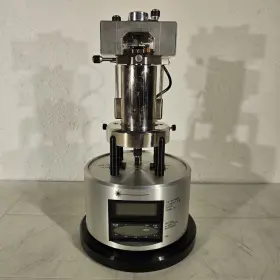
( Brand: Bruker Veeco Digital Instruments ), ( Microscope Structure: Upright ), ( Unit Type: Unit ), ( Microscope Type: Atomic Force Microscope ), ( Viewer: Monocular ), ( Manufacturer Part Number: MMAFM-2 ), ( Country/region Of Manufacture: United States ), ( Intended Use/discipline: Biological Laboratory, Chemistry, Physical Laboratory )
Review BRUKER VEECO DIGITAL INSTRUMENTS Di Instrumentsmm Afm-2 Nanoscope Contact/tapping Mode Afm Scanner Hardware
The Bruker Veeco DI Digital MMAFM-2 Nanoscope Contact/Tapping Atomic Force Microscope (AFM) is a versatile and advanced instrument designed for high-resolution surface characterization at the atomic scale. This state-of-the-art AFM system combines both contact and tapping modes, providing users with a comprehensive solution for various sample types and measurement requirements.
The MMAFM-2 Nanoscope is engineered with Bruker's proprietary Nanoscope V controller, which delivers excellent data acquisition, advanced control and imaging capabilities. The controller offers a user-friendly interface, allowing researchers to easily navigate through complex scanning tasks and analyze data with ease.
The Contact mode provides high-resolution imaging and force measurements with a small, focused contact probe, which is ideal for soft and hard materials with high surface roughness. This mode enables the measurement of force curves and provides topographic data with low scan rates for precise, high-quality imaging.
The Tapping mode, in contrast, employs a gentle oscillation of the probe to maintain contact with the sample surface while measuring topography. This mode is especially useful for fragile samples, offering better lateral resolution and minimizing sample damage. With the MMAFM-2 Nanoscope, users can switch between contact and tapping modes seamlessly, granting them the flexibility to address diverse material characterization challenges.
The system's high-performance scan head, featuring a large scan range (up to 100 m x 100 m) and a fast scan rate (up to 60 Hz), ensures efficient and accurate data acquisition for large samples or fast throughput. The MMAFM-2 Nanoscope is also equipped with an integrated heater and temperature control system, enabling measurements on temperature-sensitive samples at controlled temperatures, ranging from -15 C to 80 C.
Additionally, the MMAFM-2 Nanoscope provides advanced capabilities for lateral force microscopy (LFM), friction force microscopy (FFM), and force-volume experiments, making it a powerful tool for probing various material properties. The 5-axis sample manipulation also ensures that the correct probe alignment is maintained for optimal data collection, delivering accurate and reliable results.
The MMAFM-2 Nanoscope offers an integrated user laboratory, granting researchers 2D and 3D visualization tools for data analysis, as well as access to the extensive Bruker DataAnalysis suite for extended analysis capabilities. These features allow users to process and interpret data with ease and confidence, enhancing the overall research experience. Whether researchers are characterizing samples for materials science, nanotechnology, or semiconductor analysis, the Bruker Veeco DI Digital MMAFM-2 Nanoscope Contact/Tapping AFM represents a robust, reliable, and powerful tool for atomic force microscopy applications.
Bruker Veeco DI Digital MMAFM-2 Nanoscope: A Comprehensive Analysis of its Advantages and Disadvantages
1. Introduction
The Bruker Veeco DI Digital MMAFM-2 Nanoscope is a versatile and advanced Atomic Force Microscope (AFM) system capable of both contact and tapping mode scanning. This analysis aims to provide a clear understanding of its key advantages and disadvantages.
2. Advantages
A. High Resolution: The Nanoscope offers superior resolution, enabling researchers to study minute features and structures on the nanometer scale. This high level of detail can lead to valuable insights in various domains, including material science, biology, and nanotechnology.
B. Fast Imaging: The system includes a fast scanning speed, which can significantly save time in imaging large areas or sampling multiple locations within a given sample. This increased efficiency can lead to substantial time and cost savings for research projects.
C. Versatile Applications: The Nanoscope's contact and tapping modes provide two distinct methods for measuring force interactions between the probe and sample surface, broadening the scope of potential applications and allowing researchers to tailor their approach to the specific requirements of their experiments.
D. Intuitive Software: Bruker's proprietary Nanoscope Analysis Software offers an intuitive and user-friendly interface, making it easier for researchers to acquire, analyze, and process data. The software also supports advanced visualization and analysis features.
3. Disadvantages
A. Cost: The high cost of the Bruker Veeco DI Digital MMAFM-2 Nanoscope places it out of reach for many researchers and smaller institutions due to prohibitive expenses related to purchasing, maintenance, and operation.
B. Complexity: The instrument's complexity necessitates a certain level of technical expertise and specialized knowledge to operate effectively. Additionally, routine maintenance and calibration requirements can be time-consuming and demanding.
C. Limited Sample Size: The scan area of the Nanoscope is somewhat smaller compared to other AFM systems, which may limit its applicability for studying larger samples or examining statistically significant sample populations.
4. Conclusion
The Bruker Veeco DI Digital MMAFM-2 Nanoscope reflects a significant investment in advanced nanoscale analysis capabilities. Although its high cost presents a major hurdle for many researchers, the system's superior resolution, fast imaging, versatility, and intuitive software make it an indispensable tool for numerous applications in material science, biology, and nanotechnology. Researchers at well-funded institutions with a dedicated commitment to nanoscale research and analysis will find the Bruker Veeco DI Digital MMAFM-2 Nanoscope an invaluable asset.
5. Recommendation
For researchers considering purchasing the Bruker Veeco DI Digital MMAFM-2 Nanoscope, it is essential to carefully evaluate the potential benefits against the associated costs. Institutions that can afford this advanced instrument and can commit sufficient resources to its operation and maintenance will leverage its high resolution, fast imaging, versatile applications, and intuitive software for groundbreaking discoveries in nanoscale analysis. Alternatively, researchers with more modest budgets may consider alternative AFM systems or collaborating with institutions equipped with this advanced equipment.
Details:
It includes: mm AFM-2 base with STM, AFM LFM, and mode selection switch. AS-130V vertical J scanner - scan size 125 m x m, 5.0 range. Small anti-vibration base, It does not include the control electronics or computer, those will need to be supplied in order make this system function. Contact and tapping mode cantilever holder.
This system is in used condition. Upper mm AFM-2 head with XY translator, built-in laser, optics, and adjustment knobs. Includes the scanner support ring, displays look to be in great shape. Bruker Veeco di Nanoscope mm AFM-2 Contact/Tapping Mode AFM Scanner Hardware, This hardware is in good used condition.
Used, see photos. Anything not shown in the photos is included purchase. As such, there may be cosmetic imperfections, small scratches, dents and dings, system quirks.
part #: mmafm2 prices
- $7550.00-$80800.00
specifications curativescope:
- brand: Bruker Veeco Digital Instruments
- microscope structure: Upright
- unit type: Unit
- microscope type: Atomic Force Microscope
- viewer: Monocular
- manufacturer part number: MMAFM-2
- country/region of manufacture: United States
- intended use/discipline: Biological Laboratory, Chemistry, Physical Laboratory
shipping curativescope:
- class: Standard
- cost: $0.00
- service: Standard
- type: Fixed
- transit: 4-10 Days
seller curativescope:
- rating: 99.5%
- city: Fargo, North Dakota
- # reviews: 1378
offer curativescope:
- started: January 24, 2025
- quantity: 1
- availability: In Stock
- options: Ship-to-home
- best offers: True
- sold: 0
payments curativescope:
- other
- wallet: Google-pay
- credit card: Discover
general curativescope:
- Healthcare, Lab Dental > Medical Lab Equipment, Devices > Microscopes
- condition: Used
returns curativescope:
- method: Money back
- time: 30 Days
- paid by: Buyer
- policy: Returns Accepted
Bruker Veeco Digital Instruments MMAFM-2 Is Similar To:
- Bruker 920-004-402 Atomic Force Microscope Quadrex Mm Afm With Cable (34.4% similar) The shipping quote is for the lower 48, states only. So, I'm selling it just as I received. When I arrived at the lab 80 percent of Instruments were, labeled either working, not working or discard and some all. I sell a variety of lab Instruments and don't pretend to be an expert at any them so...(March 15th, 2025)
- Bruker 840-016-984 Veeco Afm Dimension Icon Heater Base Fluid Gas Block (28.9% similar) Bruker Veeco di Digital Instruments 840-016-984 afm stem Spam atomic force microscope scanning tunneling probe microscopy dimension icon heater base fluid gas block used, see photos Ben...(June 12th, 2025)

3 offers $7550.00–$80800.00 USD
- Used. Offer #1 priced at $9452.19 + $0.00 delivery = $9452.19* total. Jogging stepper motor was tested and works in both directions. MultiMode base with STM, AFM & LFM, and TM AFM mode selection switch.FREE SHIPPING
- Used. Offer #2 priced at $7550.00 + $109.30 delivery = $7659.30* total. for the right price can be combined together. Bruker Veeco di Nanoscope .+$109.30 shipping
- Used. Offer #3 priced at $80800.00 + $0.00 delivery = $80800.00* total. -NanoScope Extender boxes Bruker MultiMode 8 Quadrex MMAFM Base (part number 920-004-402).FREE SHIPPING